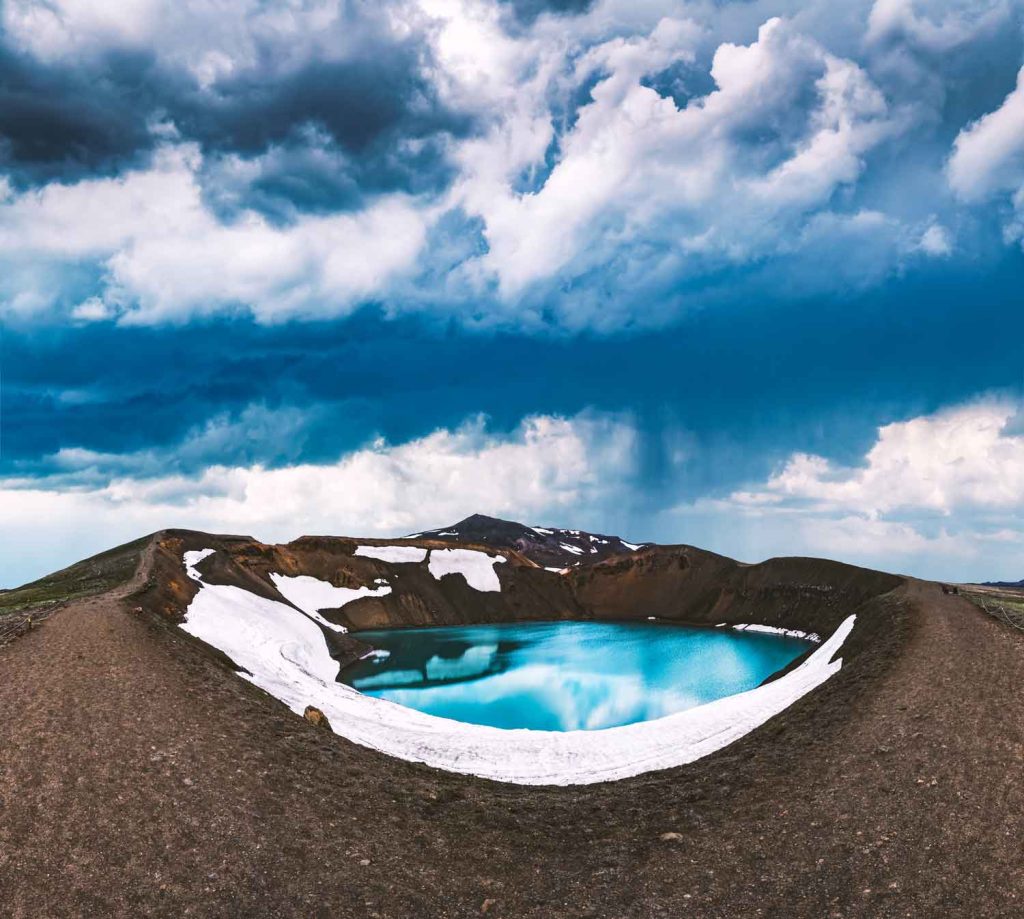
KMT provides a real-world platform to develop, test, and validate technologies under extreme subsurface conditions — where future geothermal innovation will be defined.
KMT provides a platform to test materials, sensors, and technologies under extreme conditions — enabling innovation in drilling, monitoring, and subsurface engineering.
KMT opens the door to testing new technologies and materials designed to withstand the most extreme conditions in Earth’s crust.
Constructing stable wells for instrumenting, monitoring, sampling, and testing magma is a central component of the project.
TECHNOLOGY AREAS
Drilling Systems
Developing drilling strategies capable of safely reaching the magma–rock interface under extreme thermal and mechanical conditions.
High-Temperature Materials
Testing materials, sensors, and technologies capable of operating in extreme high-temperature environments.
Sensors & Monitoring
Monitoring equipment in boreholes, on the ground, and in space will provide direct measurements of heat and mass transport from magma.
Well Design & Stability
Constructing stable wells for instrumenting, monitoring, sampling, and testing magma.
Energy Systems
Advancing technologies to harness superhot geothermal resources, potentially increasing energy output per borehole.
Data & Modeling
Integrating high-resolution subsurface data into advanced models to improve system design and operational safety.
A Real-World Extreme Test Environment
THE TESTBED ADVANTAGE
Unlike laboratory simulations, KMT provides access to real magma conditions at depth. Technologies can be tested in situ, under authentic thermal, mechanical, and chemical stresses.
This unique environment accelerates development cycles and increases technology readiness for future geothermal deployment.
FROM PROTOTYPE TO DEPLOYMENT
By reducing uncertainty through real-world testing, KMT helps bridge the gap between research innovation and commercial geothermal deployment.
Insights generated at Krafla can inform future superhot geothermal projects worldwide.